Restaurant Loyalty Program: 5 Models and Common Pitfalls
A restaurant loyalty program that protects your margin: 5 models from stamp cards to guest clubs, real reward costs, paper vs app, privacy and measurement.
8 min readFortuners Team
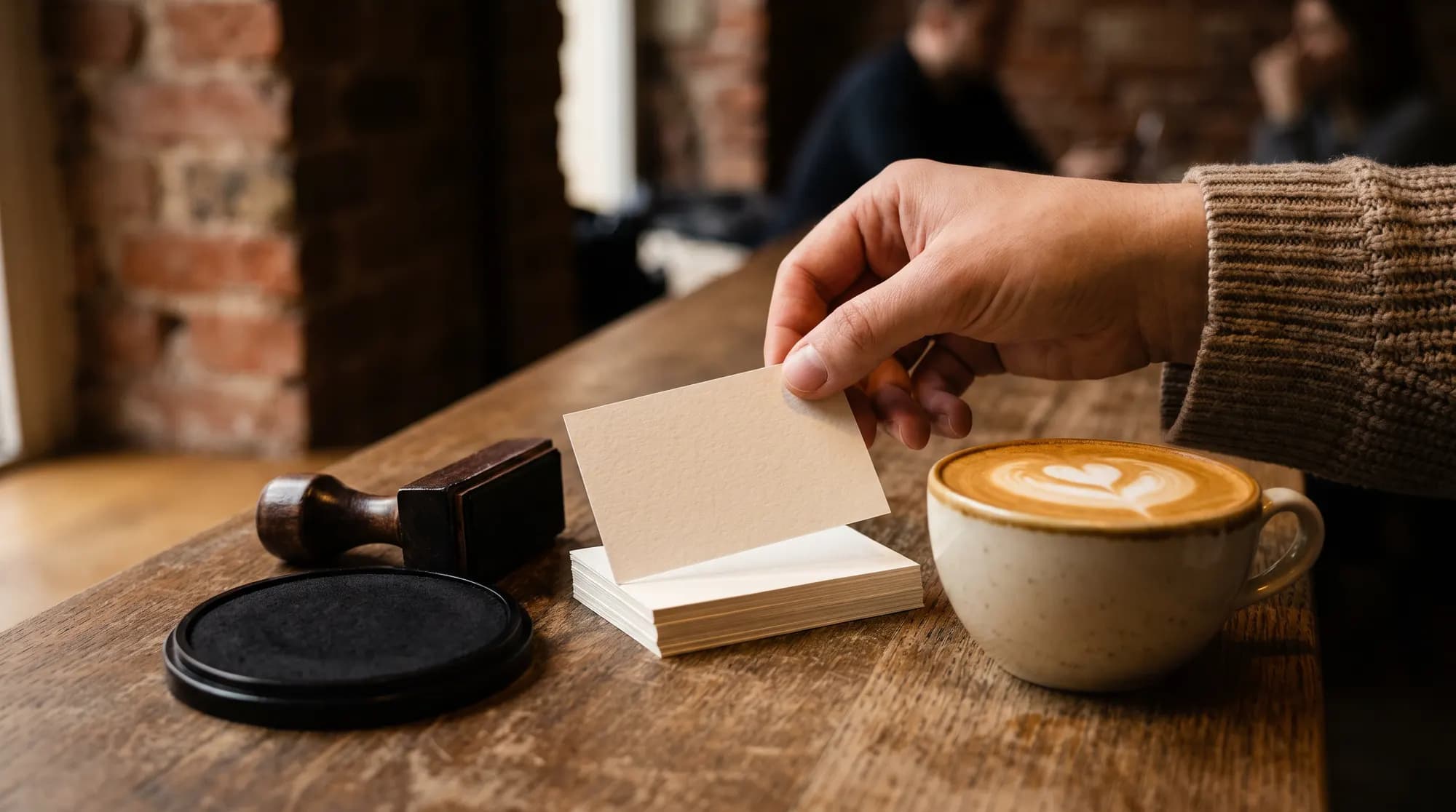
A restaurant loyalty program is a set of rules that rewards regular guests for coming back: a stamp for every coffee, points for money spent, a higher tier of perks or membership of a guest club. It makes sense when your guests can come back often (a café, a lunch bar, a neighbourhood pizzeria) and the reward costs you little while guests value it highly. Below we compare 5 models, work out reward costs through food cost, weigh paper against apps, cover GDPR and program terms, and show how to check whether guests really visit more often.
Does your restaurant need a loyalty program?
A loyalty program moves one variable: how often people who already know you come back. Check that this is really your problem first. Restaurant sales are guests × average bill × visit frequency, as our guide on how to increase restaurant sales explains.
A program makes sense when:
- local guests already return, but irregularly,
- your offer allows frequent visits: coffee, breakfast, lunch, takeaway pizza,
- nearby venues offer something similar and guests choose almost out of habit,
- staff have the time to offer the card at payment.
It probably won’t help when:
- most guests are tourists or come only for special occasions,
- the real problem is food quality, waiting times or service,
- you lack new guests, since loyalty only works on people who already came in,
- you can’t check whether visits have become more frequent.
5 restaurant loyalty program models: stamps, points, tiers, subscription and guest club
| Model | How it works | Setup cost | Staff workload | Guest data | Best for |
|---|---|---|---|---|---|
| Stamp card | a set number of purchases earns a reward | low: printed cards and a stamp | a stamp at every payment | none, if the card is anonymous | cafés, bakeries, lunch bars |
| Points | points per amount spent, exchanged for rewards from a list | medium: POS system or app | scanning a card or number at payment | purchase history | venues with varied bill sizes, small chains |
| Tiers | more visits unlock a higher tier and better perks | medium to high | checking the guest’s tier | visit and spending history | restaurants with many regulars |
| Subscription | a monthly fee for set perks | medium: recurring payments and terms | checking eligibility when ordering | payment and contact details | cafés with daily traffic, lunch bars |
| Guest club | joining gives events, early access, a birthday treat | low to medium | minimal, mostly communication | contact details and preferences | dinner restaurants, venues with events |
Stamp card. The simplest model: a tenth coffee free after nine, say. Guests get it instantly and you need no system. The downsides: faked stamps, lost cards and no idea who comes back.
Points. Guests collect points for money spent and swap them for rewards. It treats large and small bills fairly, but needs POS integration or an app, and the rules are easy to overcomplicate. If guests have to work out how many points a dessert takes, the fun is gone.
Tiers. Regulars move up after a set number of visits and get perks that needn’t cost anything: their favourite table, priority for events, an invitation to taste the new menu. It works where guests value recognition more than discounts.
Subscription. Guests pay a fixed monthly amount for set perks, such as a coffee every working day. You get predictable revenue and daily traffic, but must calculate carefully how often an average subscriber will use it. If you sell subscriptions online, check your consumer distance-selling obligations.
Guest club. Joining, usually with an email or phone number, brings events, early menu news or a birthday treat. It’s more a communication channel than a rewards system, so it’s only as good as what you have to say.
You can combine models, such as a stamp card for everyone plus a guest club for event fans, but add the second only once the first runs smoothly.
Restaurant loyalty program ideas by venue type
There is no single best restaurant loyalty program. The best one is the one guests understand in a sentence and staff can run at a busy till. As a starting point:
- Coffee shop or bakery: a stamp card with a coffee or pastry as the reward.
- Lunch bar in a business district: a lunch stamp card or a weekday lunch subscription.
- Neighbourhood pizzeria: stamps or points for orders placed directly with you, not through delivery platforms where the customer relationship isn’t yours.
- Dinner restaurant: a guest club with tastings and events, plus priority bookings for the most loyal guests.
- Small chain: points in an app or POS system, so a guest’s history follows them between locations.
Rewards that don’t eat your margin
Guests see the reward’s menu price; you pay the ingredient cost (food cost) plus a little labour. That gap makes a well-chosen reward cheap and a discount expensive.
Illustrative example (made-up figures):
- a coffee costs PLN 14 on the menu, and its ingredient cost (coffee, milk and a cup) is PLN 2.50,
- with a “tenth coffee free” program, a guest buys 9 coffees for PLN 126, and the reward costs you PLN 2.50,
- that’s about 2% of the revenue from those nine coffees,
- by comparison, a permanent 10% discount on every coffee would cost you PLN 12.60 over the same nine purchases.
A second example, a lunch bar (made-up figures): lunch costs PLN 35 and its food cost is 30%, or PLN 10.50. A “sixth lunch free” program means that after 5 lunches worth PLN 175, you give away PLN 10.50, or 6% of revenue. If the reward is a dessert with an ingredient cost of PLN 3 instead, the cost falls to just under 2%.
One caveat: if the guest would have bought that tenth coffee anyway, you give away revenue, not just ingredients. A program pays for itself only when extra visits outnumber the rewards you hand out.
Rewards guests value highly that cost you little:
- a drink or dessert with a low ingredient cost,
- a bigger portion or an extra side,
- perks with no ingredient cost: a favourite table, priority bookings, a tasting invitation,
- a treat for a friend the guest brings along, which brings in a new person.
A nice touch at the end of the visit needn’t come out of your food cost. In Fortuners campaigns, venues serve a fortune cookie with the bill, paid for by the brand advertising inside it, and approve every brand before launch.
Paper card or app?
| Criterion | Paper card | Digital card (app, POS system, mobile wallet) |
|---|---|---|
| Getting started | printed cards and a stamp, ready in days | choosing a provider, setup, staff training |
| Ongoing cost | reprinting cards | usually a provider subscription |
| Staff workload | a stamp at payment | scanning a code or entering a number |
| Fraud | faked stamps, stamps “for friends” | harder, every transaction is recorded |
| Guest insight | none, beyond rewards redeemed | frequency, bill value, favourite items |
| Communication | none | notifications and messages, with consent |
| GDPR | no data, if the card is anonymous | terms, privacy notice, consent, a data processing agreement with the provider |
A sensible path for a small venue: start with paper, date every stamp, and for a few months check how many full cards come back. If the program takes off and you want guest insight or a way to announce new dishes, move to digital. If cards don’t come back, you’ve saved a subscription.
To protect a paper card, use a distinctive stamp design, a staff initial next to each stamp, an expiry date and a one-stamp-per-bill rule.
GDPR and program terms
These pointers are general. Before you launch a program that collects guest data, have your terms and documents checked by a lawyer.
Anonymous card. A paper card with no name, phone number or email involves no personal data processing. That’s a big advantage.
Program with guest accounts. Once you collect data, your venue is the data controller. Tell guests who processes their data, why, on what legal basis and for how long. Collect only what the program needs: a birthday treat requires a day and month, not the year. A third-party app usually means a data processing agreement with the provider.
Offers and messages. Joining the program and agreeing to marketing are two different things. Offers by email or text message need separate, prior, voluntary consent, given with a checkbox that isn’t ticked by default and easy to withdraw. If you analyse order history to personalise offers, say so in your privacy notice.
What your loyalty program terms should cover
- The organiser: full company name and contact details
- Who can take part and how to join
- How stamps or points are earned, including exclusions
- Rewards, how to claim them and whether they combine with other promotions
- Expiry dates for cards, points and rewards
- How the terms can change and how the program can end
- How to make a complaint
- Information on personal data processing, or a link to it
- Where guests can read the terms before joining
How to measure whether your loyalty program works
Regulars happily taking cards isn’t proof of success. Your most loyal guests would come anyway, so what counts is whether there are more visits than there would be without the program.
| Metric | How to calculate it | How often |
|---|---|---|
| Share of bills with a card | bills with a card ÷ all bills | monthly |
| Member visit frequency | member visits ÷ active members, per month | monthly |
| Time between visits | average days between stamps or transactions | quarterly |
| Reward redemption | rewards claimed ÷ cards issued or members | monthly |
| Program cost | food cost of rewards + printing or subscription + staff time | monthly |
With a paper card, gather data by hand: add a “loyalty card” button on your till, date every stamp and check the gaps between dates on returned cards once a month.
Illustrative example of the effect (made-up figures):
- the program has 200 active members,
- before launch this group came 2.0 times a month on average (400 visits); after three months it comes 2.4 times (480 visits),
- the extra 80 visits, at a margin after food cost of PLN 15 per visit, bring in PLN 1,200 a month,
- with a reward every tenth visit, you hand out 48 rewards at PLN 2.50, or PLN 120, plus printing and staff time.
Compare the same guests in a similar season. Weather, a new menu or roadworks nearby can all move the numbers, so watch the trend over several months, not one good week.
Common restaurant loyalty program pitfalls
- A reward that’s too far away. If a regular comes twice a month, a 10-stamp card means a reward after five months, and many cards get lost on the way. Shorten the card or give the first stamp on sign-up.
- Nobody mentions the program. A card by the till does nothing. Staff should offer it at every payment in one sentence, and congratulate guests with a full card.
- A discount instead of a reward. A permanent percentage off teaches guests your normal price is too high, and costs more than a treat.
- A reward nobody wants. Ask a few regulars. Sometimes a favourite table means more than another coffee.
- A program instead of quality. Stamps won’t keep a guest who waited 40 minutes for a cold soup.
- Data with no plan. Collecting phone numbers you never use only gives you GDPR obligations.
- Changing the rules midway. If you change the threshold or reward, honour cards already issued and give guests notice.
- Rewards for reviews. Don’t tie the program to Google reviews: Google’s policies prohibit offering incentives in exchange for reviews. We explain how to collect reviews within the rules in our article on QR codes for Google reviews.
A loyalty program keeps the guests you already have. If you need new ones first, see our list of restaurant marketing ideas.
Frequently asked questions
What is the best loyalty program for a small café?
To start with, a paper stamp card is usually enough, with a reward that has a low ingredient cost, such as a coffee or a pastry. It needs no app and no personal data, and after a few months you know whether guests use it and whether a digital version is worth the cost.
How many stamps should a restaurant loyalty card have?
Enough for a regular to earn the reward within a few weeks, not half a year. Check how often your regulars come back and set the threshold to match that rhythm. A café that people visit daily can use a longer card than a restaurant where guests come once every two weeks.
Does a restaurant loyalty program need GDPR consent?
A paper card with no name, phone number or email involves no personal data. If your program uses guest accounts, you need program terms and a privacy notice, and sending offers by email or text message requires a separate, voluntary consent. Check the details with a lawyer.
How do I know whether my loyalty program is working?
Record your starting figures before launch, then track every month the share of bills with a card, how often members visit, how many rewards are redeemed and what they cost. The program works if the extra margin from more frequent visits is higher than the cost of rewards and running the program.